Friday, June 17, 2016

Rochester

Who'd a thunk it;  Rochester, NY was very interesting.  Spent a few days in the third largest city in NY.  Founded shortly after the American revolution, in the search for more agricultural land, Rochester became the "Young Lion of the West", then "Flour City" for all the flour mills operated there due to their access to water.  Erie Canal went right through the city, and eventually Rochester spawned Kodak, Xerox, Bausch & Lomb; more recently Genessee Brewing and Wegmans (supermarket chain).  It seems all these once wealthy towns have a "millionaire's row" where  stately mansions have been kept up.  Rochester has as many/more than any of the other cities we visited, one after another, magnificent structures from a bygone era. 
 
We toured the home of George Eastman (founder of Kodak).  His hard working father died when Eastman was young; his mother took in boarders; George ended up quitting school and ended up developing dry process photography, after a lot of tinkering.  He then developed the film roll, with the marketing campaign "Just press the button, we do the rest", as users of his film/camera would send to him for development.  Eventually, in 1901, he introduced the $1 Brownie camera and the world was his.  He became the sixth richest man in the US, eventually gave away $100 million to worthy causes. 


Eastman's home on "millionaire's row"; quite impressive.


His "breakfast room"; Eastman had an organist play for him each morning.


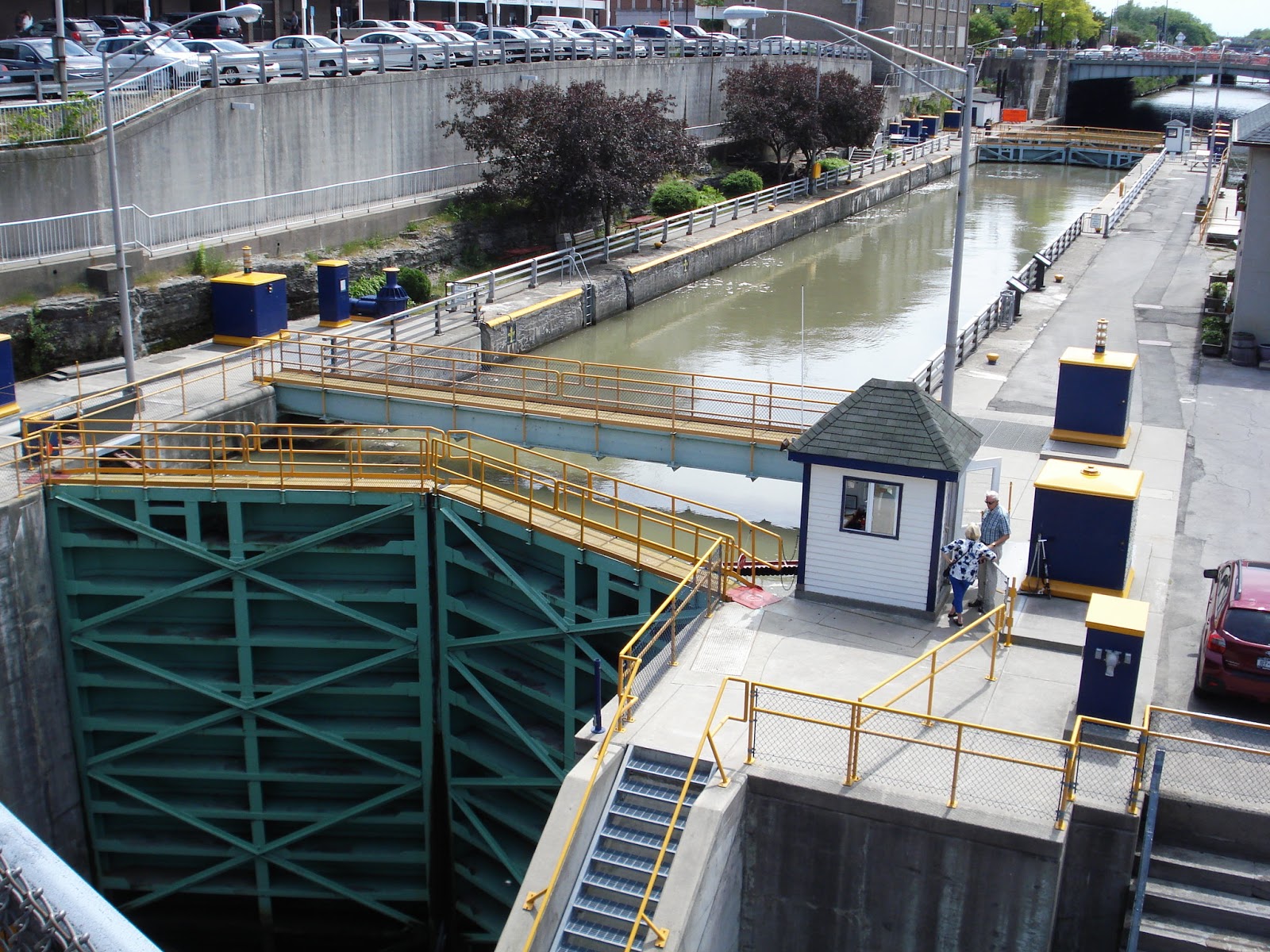
Marlene's grandfather was a Captain on the Erie Canal,  then operated the locks.  The Canal has a rich history, being the first waterway linking the Atlantic Seaboard to the western interior of the US.  363 miles long, it raises the transport vehicles 565 feet so they can enter Lake Erie and the Niagara River.

Below, one of the locks in the Erie, raising a boat 25 feet in about 6 minutes.


One of the most interesting stops was the Strong Museum of Play; dedicated to the history of play, how important it is in our and our children's development.  It chronicles all the great games in history, but the most impressive part of the museum were the numerous (many, many, many) interactive areas for children and their parents to create, in so many ways.  The place was packed, it is extremely popular.  A simple idea, celebrate the history of play, done in an extraordinary way.  Definitely a must see if you ever get to Rochester.


One of the many sayings there that rang true.


The hall of fame room, nicely done.


Marlene enjoying their excellent butterfly garden.
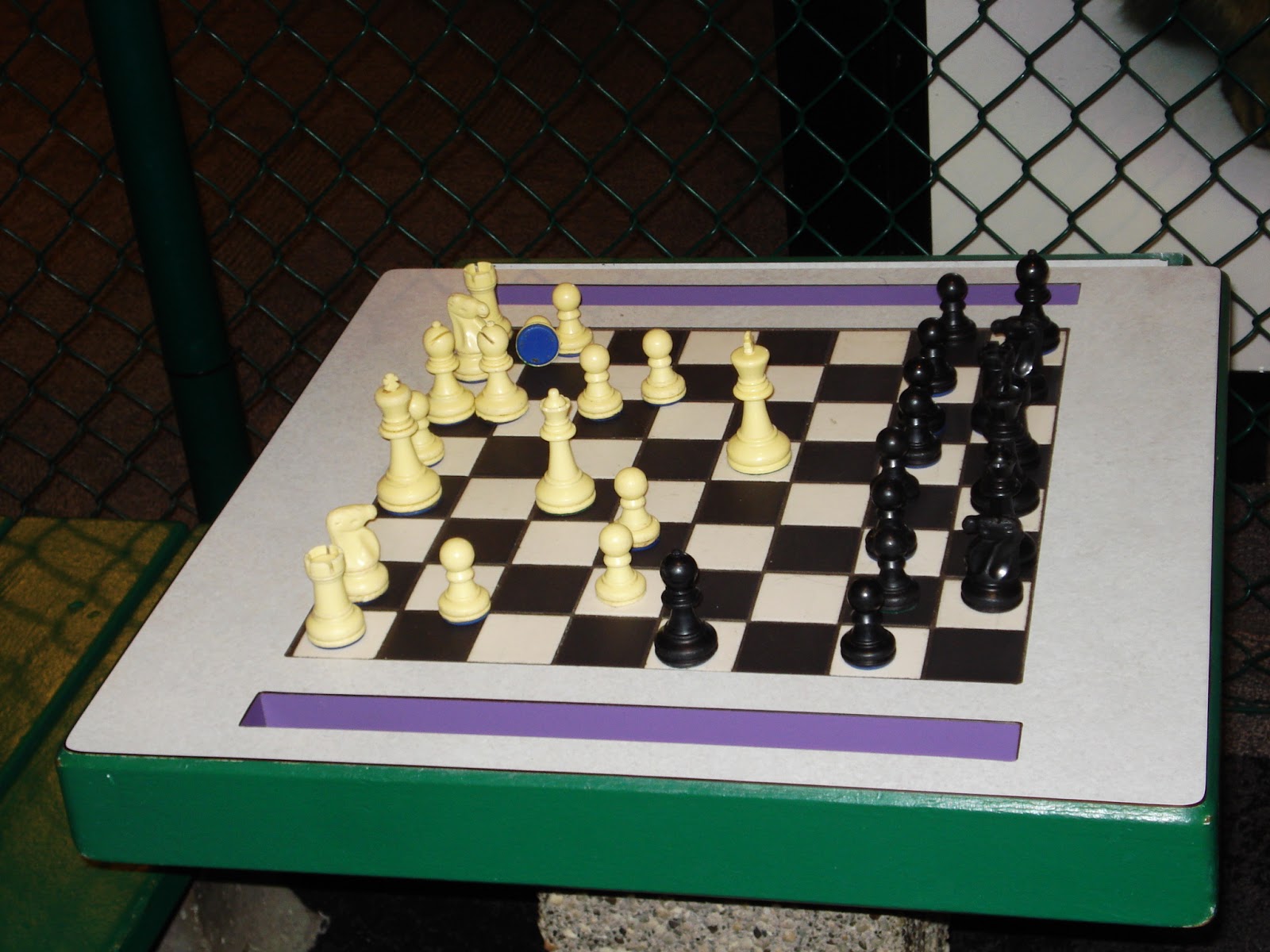

A classic, this pic is for you, Caedmon.


Wegmans, a chain of great supermarkets, headquartered in Rochester, is a corporate sponsor of the Strong Museum.  Here they built a mini supermarket, just for kids, with fake food, kid cash registers, etc.  Place was very popular; kids had a great time, doing their shopping, acting as cashiers, bakers. Can't tell you how impressive it was.


Two young girls operating the kid's register, checking out a customer.  You can see that they are taking this seriously


The bakery, with faux bread, kid's oven, etc.


Young lady, shopping for her family.


Produce section.

Our RV park was very close to Holley Falls; below a nice pic of the falls with a guy fishing.


Oh, yes, can't forget the tennis.  Rick Rickenbach was kind enough to hook me up with his bud, Dave Gaudino, at the Tennis Club of Rochester.  Had a great time in a close three setter on har-tru.  Thanks Rick.


Sharing a beer with the boys after a fun match.

Wednesday, June 8, 2016

Buffalo, Niagara Falls

Buffalo/Niagara Falls
 
Now, when you first think of Buffalo, what do you think?  Snow?  Niagara Falls?  Four consecutive lost Super Bowls? (That's not easy, Scott Norwood, "wide right").
 
Well, Buffalo is an interesting story.  Originally a small trading community connecting the East to the West, in 1804 the Dutch "Holland Company" laid out a spoke and wheel grid (much like Washington DC) pattern for the new town.  It was a sleepy town until the completion of the Erie Canal in 1825, connecting Albany and points East to Buffalo and points West.  Buffalo boomed, producing great wealth for the area.  It was a primary access for grain and mineral commerce, immigration among other things.  The advent of the railroads eventually killed off the benefit of the Erie Canal and eventually the St. Lawrence Seaway plus the de-industrialization of America crippled Buffalo as officially part of the "Rust Belt".  Finally, in the early 2000's, the town fathers developed the Buffalo Fiscal Stabilization Authority to try and help.  More recently, in 2013, New York state and Governor Cuomo granted a $1 Billion total of grants and tax benefits to attempt to jump start the Buffalo area.  It has resulted in health services industry, solar manufacturing and wind energy development for the area.  In addition, the downtown is going through a renaissance.  New stores, theatres, restaurants and residences are being developed.  To me, it is a leap of faith, but you have to start somewhere.  Downtown looks very new/renovated, they have added a  trolley line, but they could use more people.  Current unemployment is 5%; living costs are very reasonable; we'll see how they do.  They have saved many spectacular old commercial buildings and residences from the "golden years"; some have been or in process of being renovated.  From my point of view these renovations are a "labor of love"; more power to them; I wish them the best./
 
 
The new trolley line; somewhat limited, but still well used.


Lobby at the Statler, 1100 room hotel currently being renovated.  Picture does not do it justice; lots of weddings here.


Lobby of the Louis Sullivan "Guaranty/Prudential" building.  Magnificent interior.

Next, we visited the home of a young Millard Fillmore, 13th president of the US.  In my opinion, Fillmore, rated among the worst of the presidents, gets a bad rap.  He was the Northern VP to Southern President Zackary Taylor in a pragmatic ticket to win the White House.  As VP, Fillmore resided over a contentious Senate as Calhoun, Clay and Webster, among others, refused to compromise over many years, primarily over the issue of slavery.  Fillmore was basically ignored by Taylor, and Taylor would not support any compromise.  Then, when Taylor died, his entire cabinet resigned as Fillmore took over.  Fillmore, fearing the worst, promised to support Henry Clay (who, at age 73, basically killed himself in the process) and promised to sign the contentious "Compromise of 1850", which bought 10 more years prior to the secession of the South.  Fillmore also, through Commodore Perry, opened up trade again with Japan.  His Whig Party chose not to run Fillmore as their nominee during the next election.  Who said life was fair?

 
Fillmore's house, that he built, at the age of 26, and lived in until his political career began.
 
Of course, no trip up here would be complete without a trip to Niagara Falls, where the Niagara River empties Lake Erie from the Southwest to Lake Ontario to the Northeast.  A nearly 200 foot drop produces greater water flow than any other falls in the world.  Enjoyed our view there.  Below a picture of a sightseeing boat (they all get wet) and then a short video where we were perched right on top of the American Falls. 


Next a trip to Ft. Niagara, at the mouth of the Niagara river, where it empties into Lake Ontario.  The fort, developed by the French in 1726  is strategically located to control primary waterway entrance into the increasingly valuable trapping territories of North America by the Europeans.  The French/Indian War resulted in Britain gaining control of the fort, then swapped back and forth between the British and new United States, until the US gained final control in 1816.  The development of the Erie Canal in 1825 then made Ft. Niagara largely irrelevant.  Below some pics while we were there.  The docents/guides were excellent; dressed in period costumes.


Picture of a renovated group of buildings, around the time the British controlled it.


Marlene talking to a "cooper",  who makes barrels the same way they were made in the day, using the same tools.  Happily retired bank exec; excellent demo.


Soldier chopping wood; park is open all year round (don't no how they do it in the Winter).

On the Canadian side, just north of the Falls is the hidden gem, Niagara-on-the-Lake.  What a beautiful little town, surrounded by excellent vineyards, full of flowers and plantings, they take great pride in how attractive they make the town, and it shows.  If you ever get to the Falls, save a day or two and visit Niagara-on-the-Lake, you won't be disappointed.  Very popular George Bernard Shaw festival every year in Aug/Sep

Had a five star luncheon at one of the wineries there. 


Can you see the legs on that red?  Excellent wine.


Tough to see the salad above, prosciutto, asparagus, radish; delicious


Enlarge this picture of downtown scene. Still doesn't do the town justice, place just makes you smile and relax.


Found time to play some doubles on red clay at the Buffalo Racquet Club.  They were very gracious to let me play; had a great time; my "scoped" knee did pretty well. 


Monday, May 30, 2016

Pittsburgh


Pittsburgh, steel city, three rivers:


Pittsburgh, full of history, was our first stop this year.  At the intersection of the Ohio, Allegheny and Monongahela Rivers, Pittsburgh was always a desirable area, to the Indians, to the French, to the British and to westward seeking colonists.  Not only because of their waterways, but also due to rich mineral deposits in the Allegheny mountains.  It was a center of the French and Indian War, where Washington learned a bit about generalship.  Great wealth was produced here, including Carnegie and Frick with US Steel, among others.  After WWII the city transformed itself, out of necessity, to become a center of health care, finance and high tech robotics.  The picture above is of "the Golden Triangle" downtown.  Among other things, Pittsburgh has produced many great football players, including Joe Montana, Joe Namath, Johnny Unitas, Dan Marino and Tony Dorsett; pretty impressive.  The cities suburbs are quite hilly, but with some great views.

One of our first visits was to the centerpiece of the U. of Pittsburgh's campus, the Cathedral of Learning, designed and built in the 30's, on  land obtained from Henry Frick.  It is the tallest center of learning in the Western Hemisphere, with a 52 ft. high Gothic inspired great center hall.  Of particular interest to us were the nationality rooms.  Each ethnic group in Pittsburgh was invited to create a room to educate others on their culture, and 38 groups have, so far, spent anywhere from $300,000 to $750,000 to create their showcase; we felt like we were at a World's Fair; very interesting.  Below, a picture of the building.


Next, a tour of Henry Frick's elegant home, kept within the family until the preservation foundation took it over; perfectly maintained with many original furnishings and fixtures.


Visited the Botanical Gardens, below some spectacular Chihuly glass tulips embedded with actual plantings.


Close to Pittsburgh is Falling Waters, one of Frank Lloyd Wright's masterpieces, considered by many one of the modern wonders of the world.  His ability to integrate the living with the land here revitalized his career later in his life, and led to hundreds of new contracts, including the Guggenheim Museum in NYC.  Great tour at Falling Waters.


We happened upon a very inspiring story in a place called Polymath Park, some 30 minutes from Falling Waters.  Tom and Heather Papinchak, he a small .builder, she a background in early childhood education, both with a love of Frank Lloyd Wright's history, found themselves with a 140 acre plot of land containing two former homes built by a protégé of FLW.  They then, in a leap of faith, purchased, moved and renovated a 1950 era FLW house to adjoin the other two.  Under very difficult circumstances, with great perseverance and with a very positive attitude,they have taken care of these homes, rent them out to FLW lovers, give tours, started a restaurant to service their guests, and, generally, are making the business work.  We were very impressed by their "can do" spirit.  Below, Marlene and Heather, in front of one of the homes.


Finally, we spent a few days with dear friends, Lonny and Nicki Harrison, who we have not seen in a long time.  Amazing, after all the years, we just fell back into an easy enjoyment of each other's company, almost as if no time had passed.  Below, on their back deck; wonderful visit.